
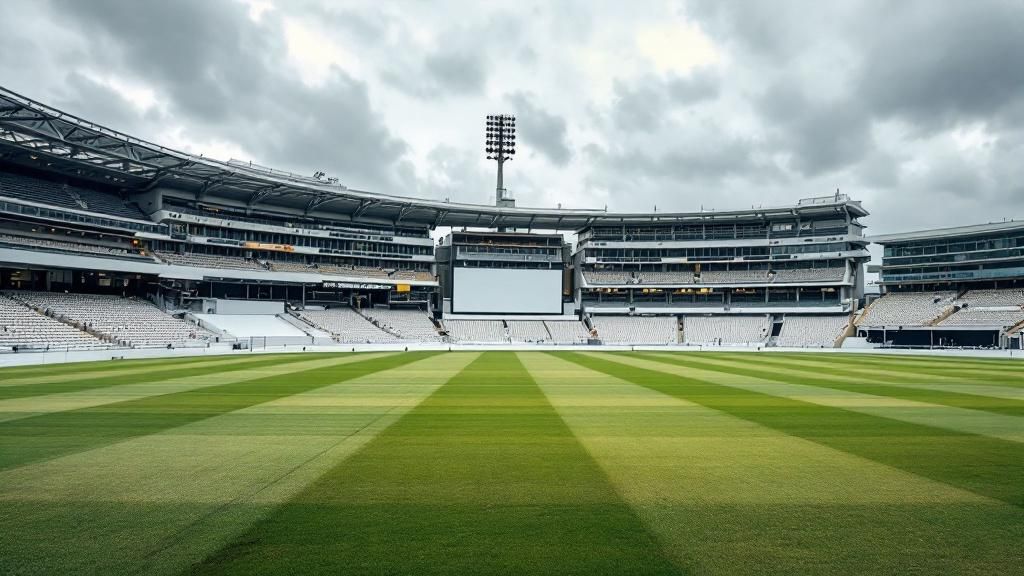
Sussex cricket club confronts an precarious future as financial difficulties worsens at Hove, with head coach Paul Farbrace informing members he has no idea whether he will still be at the club in a year’s time. Following Tuesday’s AGM, the 58-year-old acknowledged that some of his players are potentially targeted by other county sides given Sussex’s precarious financial situation. The club posted losses of £1.3m in 2025 and faces another £1m shortfall this season, leading to an emergency financial support from the England and Wales Cricket Board. Working within strict ECB restrictions and subject to a 12-point County Championship deduction, Sussex’s prospects for the forthcoming campaign appear bleak.
The extent of Sussex’s budgetary crisis
The true extent of Sussex’s money troubles was laid bare at Tuesday’s AGM, where the club’s management laid bare the consequences of years of operating losses. Sussex reported a deficit of £1.3m in 2025 and is bracing itself for another £1m shortfall throughout the current campaign. These numbers demonstrate a structural problem that has compelled the club into an emergency financial rescue from the England and Wales Cricket Board, a governing body rescue that carries substantial conditions.
Under the terms of the ECB’s oversight, Sussex will stay in special measures until January 2029, a period during which the club must operate under rigorous budgetary controls. Most significantly, any new player signings now require pre-approval from the ECB, substantially limiting the club’s capacity to strengthen its squad or substitute outgoing staff. This requirement is likely to have significant consequences for recruitment strategy, particularly regarding international recruits, and represents a humbling loss of autonomy for a club with a distinguished cricketing tradition.
- Sussex recorded £1.3m losses in 2025 and is facing a further £1m deficit
- Club operating under ECB restrictions after emergency financial assistance from governing body
- 12-point Championship deduction plus 1-point loss in limited-overs formats
- Special measures regime expected to remain in place until January 2029
Doubt hangs over Farbrace’s squad
Paul Farbrace’s role as Sussex head coach has become ever more unstable in the wake of the club’s financial revelations. The 58-year-old informed members at Tuesday’s AGM that he holds no guarantee about his prospects at the club, acknowledging that his tenure remains subject to the club’s ability to meet its financial obligations. This candid admission underscores the gravity of Sussex’s difficult situation, where even top executives cannot guarantee their ongoing positions. Farbrace’s candour reflects the unprecedented crisis engulfing the county, where conventional employment stability has become a luxury the club can no longer sustain.
Despite the bleak outlook, Farbrace reported that his playing squad stay committed to Sussex despite their reasonable anger and disappointment upon discovering the complete scale of the club’s troubles. The coach’s ability to maintain squad morale amid such uncertainty speaks to his leadership credentials, yet the precariousness of the situation cannot be understated. With players aware that the club’s precarious standing may attract interest from competing counties, keeping experienced players will prove progressively challenging. The prospect of losing established talent to more financially secure clubs represents a additional setback to Sussex’s already reduced chances for the forthcoming season.
Squad departures expected
Farbrace anticipates that a number of his squad members will be targeted by rival organisations as the campaign unfolds, a predictable outcome of Sussex’s precarious financial position. Whilst the head coach rejected specific reports that James Coles, the all-rounder had already been approached by Hampshire, he made clear that such advances are expected to escalate. Players understandably seek financial security and stability, advantages that Sussex cannot currently guarantee. The prospect of losing team members to other organisations will further undermine the team’s competitive prospects and compounds the fundamental problems facing the club.
The ECB’s mandate requiring prior clearance of new signings substantially restricts Sussex’s ability to substitute any departing players, creating a vicious cycle of decline. Even if the club identifies suitable replacements, obtaining ECB approval introduces bureaucratic delays and unpredictability into the hiring procedure. This limitation especially affects overseas signings, a conventional pathway for counties seeking to strengthen their rosters with experienced international talent. Sussex’s failure to respond quickly to players leaving places them at a significant competitive disadvantage relative to better-funded competitors.
ECB bailout includes stringent requirements
The emergency financial support scheme extended by the England and Wales Cricket Board has demonstrated a crucial resource for Sussex, yet it arrives accompanied by strict requirements that will significantly transform how the club operates. Chief executive Mark West outlined the compliance requirements at Tuesday’s AGM, making evident that Sussex’s path to financial recovery is subject to supervision and limitations. Most significantly, the club must now obtain ECB consent before recruiting new talent, a condition that will continue until at least January 2029. This unprecedented level of external control reflects the severity of Sussex’s financial mismanagement and the regulator’s determination to avoid similar situations of this magnitude.
Beyond recruitment limitations for players, Sussex must contend with a complex landscape of competitive sanctions alongside their financial rehabilitation. The 12-point deduction in the domestic first-class competition represents the most obvious sanction, yet the club has also been docked a point in each of the season’s two white-ball formats. These penalties, combined with the recruitment restrictions, create a perfect storm of competitive disadvantage. Sussex enters the upcoming season against Leicestershire already weighed down by these disadvantages, whilst simultaneously operating under the close scrutiny of ECB administrators committed to ensuring adherence to their rescue package requirements.
| Restriction | Impact |
|---|---|
| ECB pre-approval required for all new signings | Delays recruitment process and limits strategic flexibility in player acquisitions |
| Special measures until January 2029 | Three-year period of external governance and continued financial scrutiny |
| 12-point County Championship deduction | Significantly hampers promotion prospects and competitive standing from season outset |
| Limited-overs competition point deductions | Further reduces chances of silverware success across all domestic formats |
Long-term consequences for hiring
The requirement for ECB pre-approval of fresh recruits will substantially change Sussex’s signing approach for years to come. The club’s established capacity to act swiftly in the player market has been handed over to bureaucratic oversight, introducing delays that could become expensive when pursuing targets. International signings, traditionally an important route for strengthening squads, faces particular jeopardy as the ECB scrutinises international signings more rigorously. Whilst this season’s signings of Australian Daniel Hughes and India’s Jaydev Unadkat remain unaffected, forthcoming international signings will face increased examination and possible rejection.
The three-year timeframe of special measures extending to January 2029 means Sussex confronts a prolonged period of limited recruitment capacity. This extended constraint risks creating a expanding performance divide between Sussex and more financially equipped rivals who function without such limitations. The club’s ability to draw in rising players or substitute for exiting squad members will remain heavily hampered, possibly sparking a decline in on-field results. Management consultant Campbell Tickell’s structural review, scheduled in June, may recommend reforms, yet substantial improvement appears unlikely within the current regulatory framework.
Path to recovery and management assessment
Sussex’s route to financial stability remains shrouded in uncertainty, with the club facing a prolonged rehabilitation process under ECB supervision. Management consultant Campbell Tickell has been tasked with performing a detailed assessment of the club’s operational structure and management. Results are anticipated to surface in June. This review will analyse procedural shortcomings and strategic decisions that resulted in the club’s vulnerable financial standing. The review represents a critical juncture for Sussex, possibly revealing fundamental improvements needed to forestall future crises and rebuild trust among stakeholders in the club’s leadership.
The period for turnaround extends well beyond the present campaign, with Sussex operating under special measures until January 2029. This 36-month window of independent monitoring will fundamentally reshape how the club conducts business, from player acquisition to budgetary allocations. The ECB’s involvement, whilst providing essential financial assistance, comes with stringent conditions that limit independence and require constant adherence checks. Club management must exhibit ongoing budgetary control and structural enhancements to eventually regain self-governance, a formidable task given the fundamental systemic issues that precipitated the emergency bailout.
- Campbell Tickell assessment results expected June 2026 for identifying structural reforms
- Special measures monitoring continues until January 2029 requiring strict ECB compliance
- Governance improvements essential for restoring stakeholder confidence and financial stability
